Sérgio Alves
I'm an Assistant Professor in Computer Science at the University of Minho. I'm passionate about building technology that prioritizes the human experience. I believe that, more important than just writing code or designing beautiful layouts, it's making sure technology actually works for the people using it.My research has focused on exploring digital systems to improve well-being and healthcare, as well as empowering individuals to take an active role in the design and use of digital technologies by promoting access and control in user interface design.
Human-Computer Interaction, Digital Health, Accessibility

Recent Projects
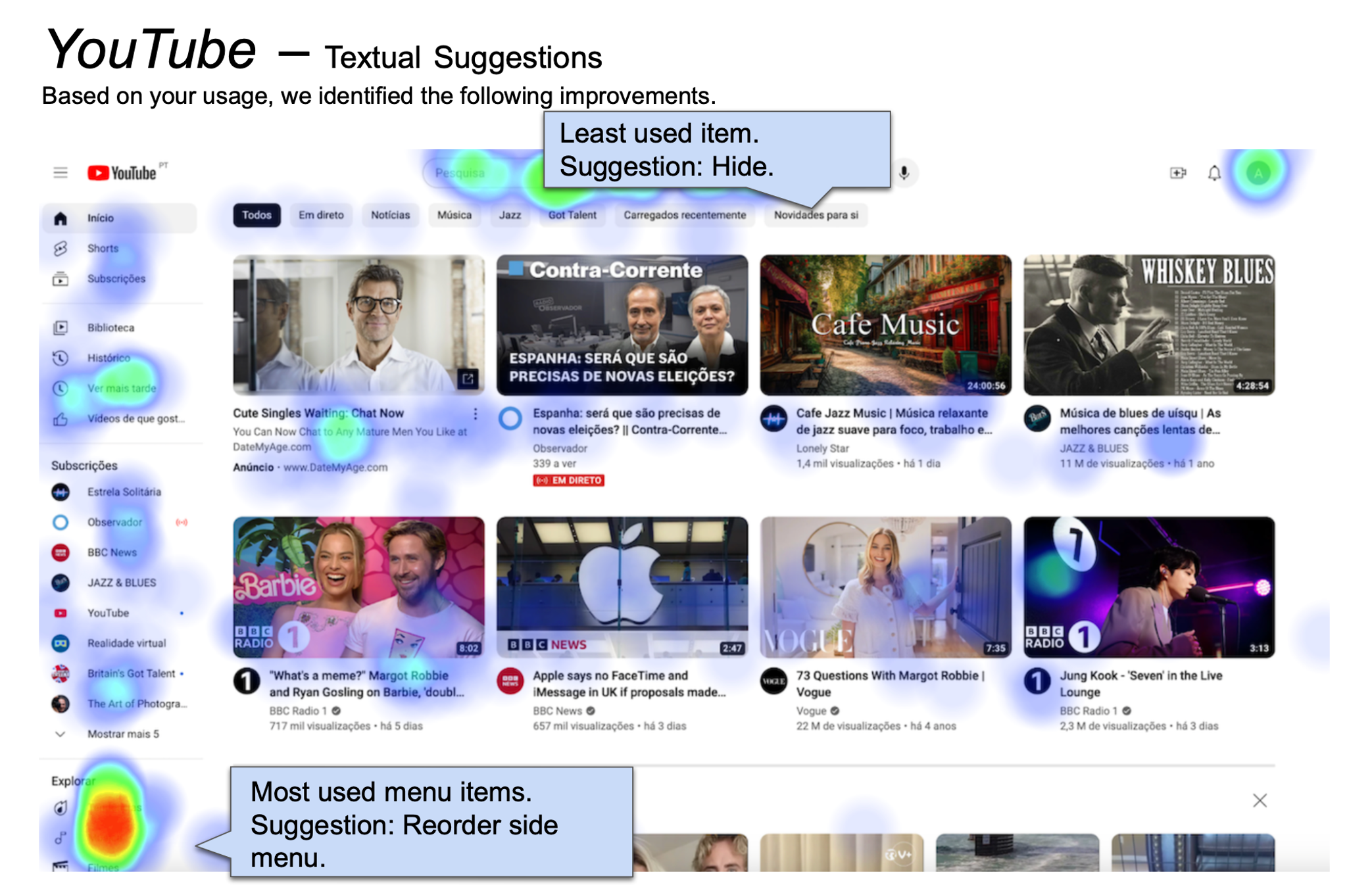
Different people engage with and experience the same user interface (UI) in entirely different ways, challenging the effectiveness of 'one-size-fits-all' UIs. While personalization features exist to change font sizes or color modes, transformative changes (changes that allow users to completely reshape interfaces for their unique needs) are inaccessible to most users. The goal of this project was to reimagine UI personalization, investigating how to empower users to meaningfully redesign the graphical user interfaces they use. We placed users at the center of our research. Across multiple studies, participants were invited to share their perspectives, supported in identifying and enacting interface changes, and encouraged to reflect on how personalization tools and UIs should be designed. Specifically, we examined how community-based mechanisms can support the implementation of personalization and how access to interaction data can facilitate ideation. More details about the methods and findings of this work are available in the PhD thesis Democratizing User Interfaces. Additionally, the specific methodologies and study results are detailed across several peer-reviewed publications produced during this period.
This project highlighted how personalized biographical materials can enrich cognitive stimulation and support dementia care by making treatment more meaningful and person-centered. Our research shows that many care staff lack knowledge and materials about the people they support. This gap limits the impact of stimulation activities, which are known to improve the quality of life for both people with dementia and their caregivers. We developed and studied digital tools to help collect and share personal stories and materials in care settings and explore new ways to deliver cognitive stimulation. These works highlighted the value of moving beyond paper-based tasks to more engaging and personalized digital interventions.
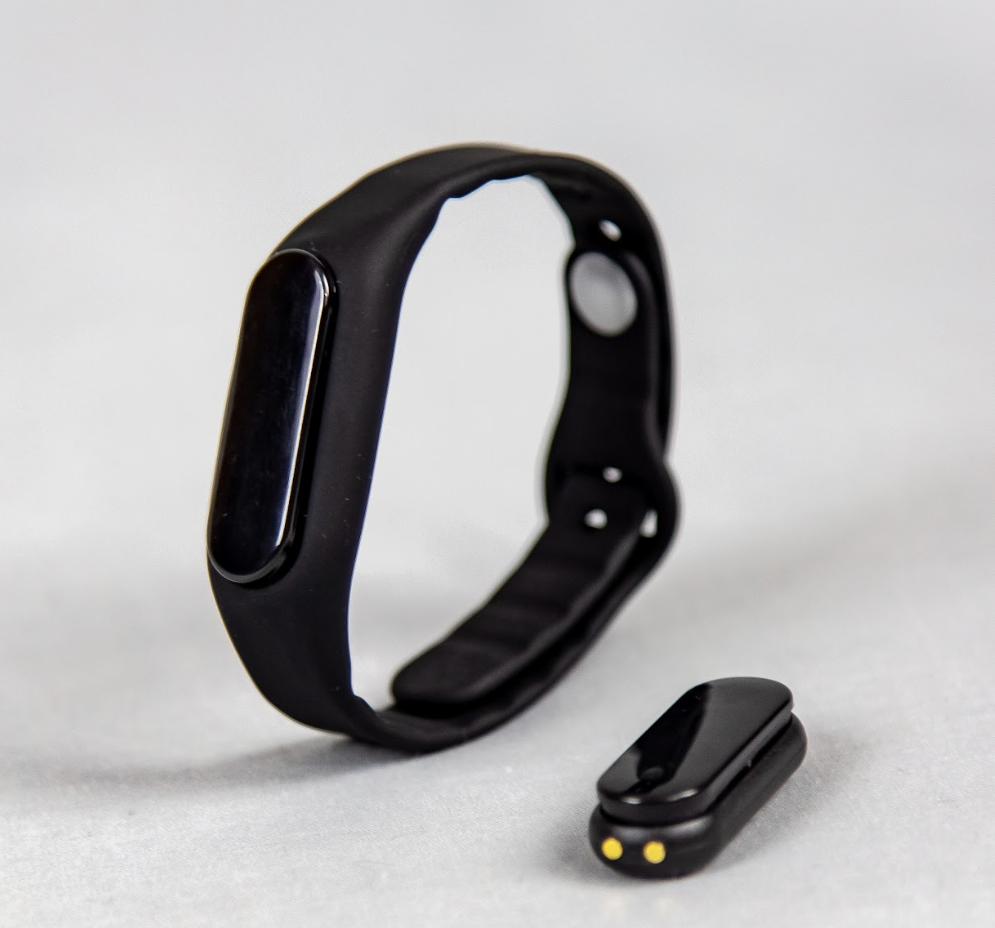
This research project aimed to reimagine healthcare technologies to empower people with Parkinson's (PwP) to be active participants in managing their condition. Rather than solely building devices for clinicians or researchers to collect data, our goal was to create affordable, user-driven tools that enable individuals to explore, understand, and manage their own health. The project aimed to create wearable technologies that adapt to the real-life challenges and goals of PwP. Instead of building bespoke hardware from scratch, we explored how existing open-source technologies could be adapted to create a versatile and low-cost solution. As part of this effort, I contributed to the validation of the AxLE device, a new version of the AX3 sensor. AxLE is a 3-axis accelerometer offering: (1) low cost (under 20 euros); (2) 30+ days of battery life; (3) Bluetooth Low Energy (BLE 4.0); and (4) an inconspicuous appearance. In parallel, I developed PDCueing, a cross-platform mobile application designed to connect people with Parkinson's disease to the AxLE device via BLE.
Recent Publications
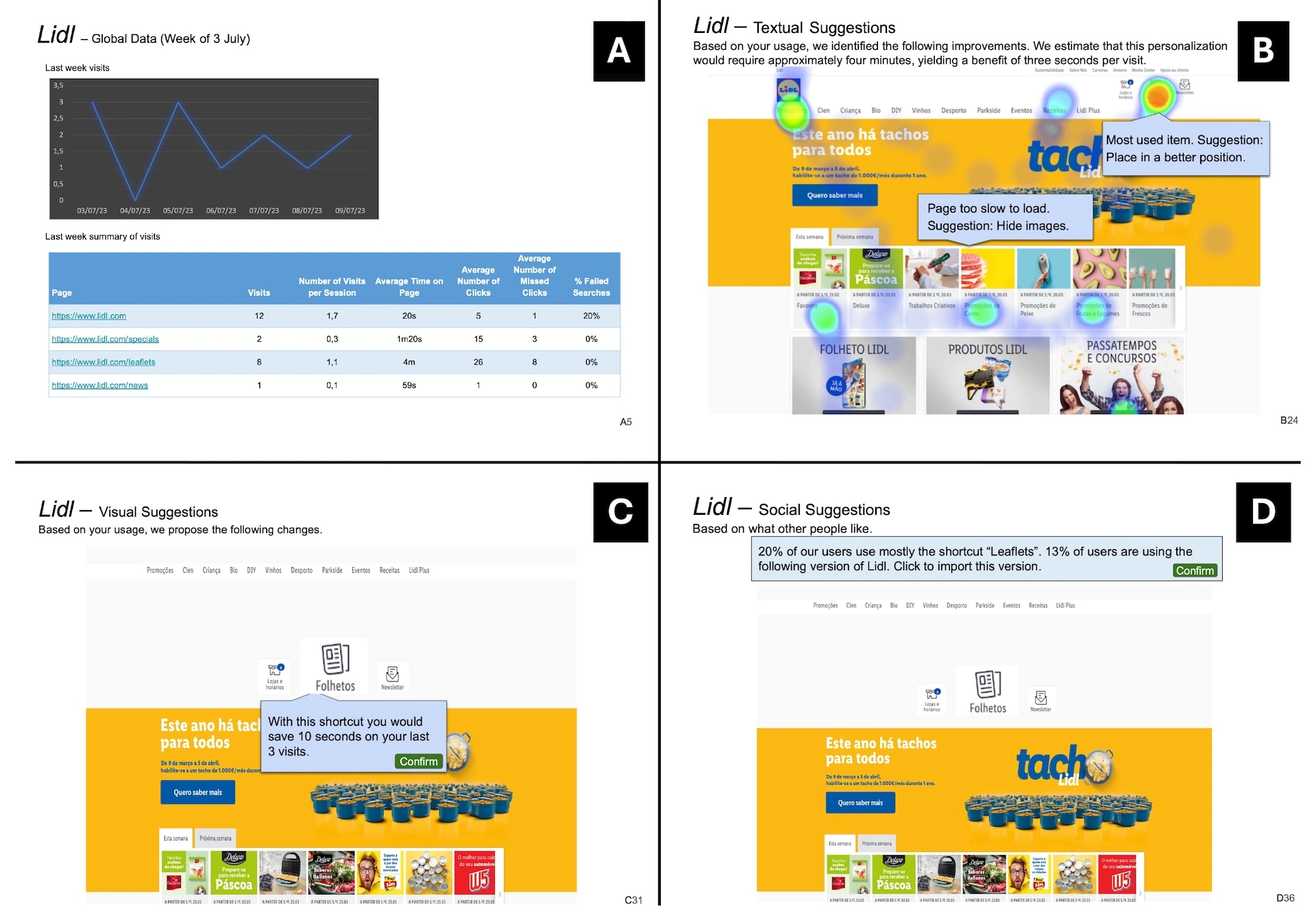
We explore a reflexive personalization approach where individuals engage with their digital interaction data to identify meaningful personalization opportunities and benefits. We interviewed 12 participants, using experimental vignettes as design probes to support reflection on different forms of using interaction data to empower decision-making in personalization and the preferred level of system support. We found that people can independently identify personalization opportunities but prefer system support through visual personalization suggestions. Interaction data can shape how users perceive and approach personalization by reinforcing the perceived value of change and data collection, helping them weigh benefits against effort, and increasing the transparency of system suggestions. We discuss opportunities for designing personalization software that raises end-users' agency over interfaces through reflective engagement with their interaction data.
In this dissertation, we investigated how to democratize graphical user interfaces (UIs) through personalization. Drawing on democratic principles rooted in freedom and equality, with power distributed and individuals participating in decision-making, we explored a shift from static, developer-controlled interfaces toward a more democratized process in which individuals can exercise control over the design of the UIs they use. User interfaces are key intermediaries for accessing public services, information, and entertainment. Nevertheless, most UIs follow a one-size-fits-all approach, which limits their experience in contexts or by users not considered during design. UI personalization seeks to bridge this gap by aligning standardized layouts with individual preferences, enhancing efficiency, usability, and accessibility. While some systems allow superficial adaptations (e.g., color modes and font sizes), these are often misaligned with users' actual needs and preferences. Conversely, more open-ended approaches (e.g., code injection) demand significant effort and expertise, placing them beyond the reach of most users. This dissertation investigates the democratization of UIs, which results from <b>empowering users to meaningfully reimagine and redesign the interfaces they use</b> in daily life. Democratization extends beyond simply providing personalization options; it requires creating conditions where all users (not only experts) can exercise agency over their interfaces. This involves reducing the effort required for implementation and supporting users in identifying personalization opportunities that are both significant and beneficial. To address this challenge, we placed <b>users at the center of our research</b>. Across four studies, participants were invited to share their perspectives, supported in identifying and enacting interface changes, and encouraged to reflect on how personalization tools and UIs should be designed. Specifically, we examined how community-based mechanisms can support personalization implementation and how access to interaction data can facilitate ideation. This work makes several contributions, including: (1) <b>an in-depth account of user needs, practices, and challenges in personalization</b>; (2) <b>the concept of community-based personalization as a way to adapt, share, and reuse interface customizations</b>; (3) <b>design considerations for leveraging interaction data to guide users toward meaningful personalization</b>; and (4) <b>a design space for end-user UI personalization to inform future research and practice</b>.
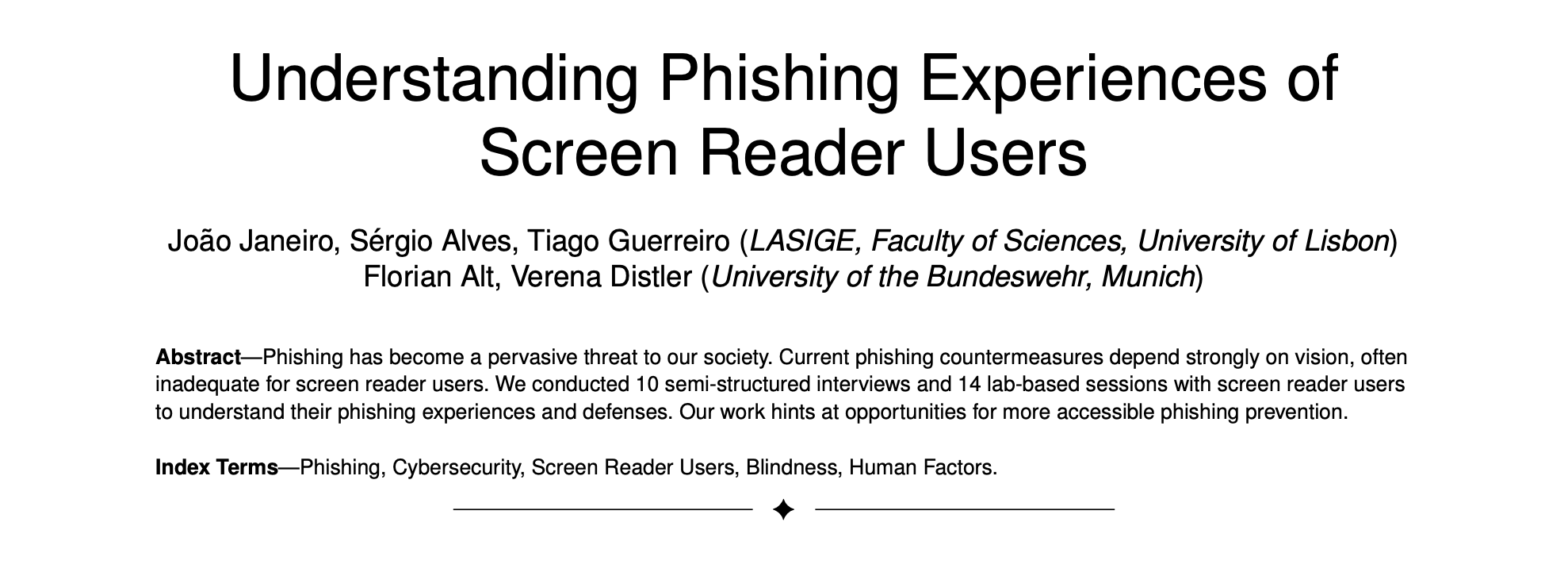
Phishing has become a pervasive threat to our society. Current phishing countermeasures depend strongly on vision, often inadequate for screen reader users. We conducted 10 semi-structured interviews and 14 lab-based sessions with screen reader users to understand their phishing experiences and defenses. Our work hints at opportunities for more accessible phishing prevention.
Featured Software
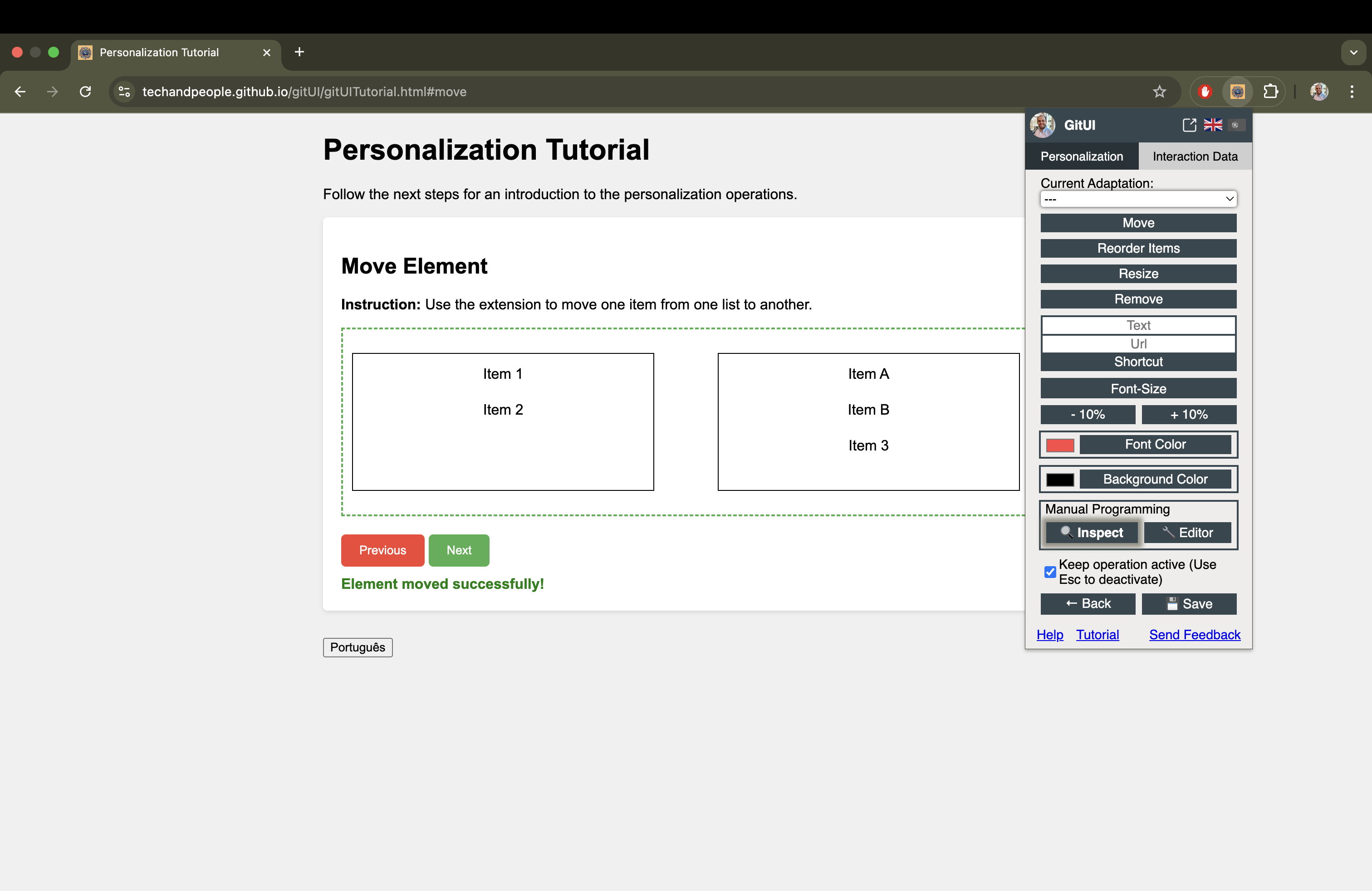
GitUI is a Chrome extension designed to empower users to personalize the Web interfaces they use to enhance productivity, usability, or express personal style. It offers nine customization operations, enabling users to modify colors, resize and move interface elements, add shortcuts, and more. To support meaningful and informed customization, GitUI also collects and displays interaction data (such as click and scroll behavior), helping users identify high-use interface components. This data-driven approach enables users to uncover optimization opportunities and tailor their interfaces based on actual usage patterns.
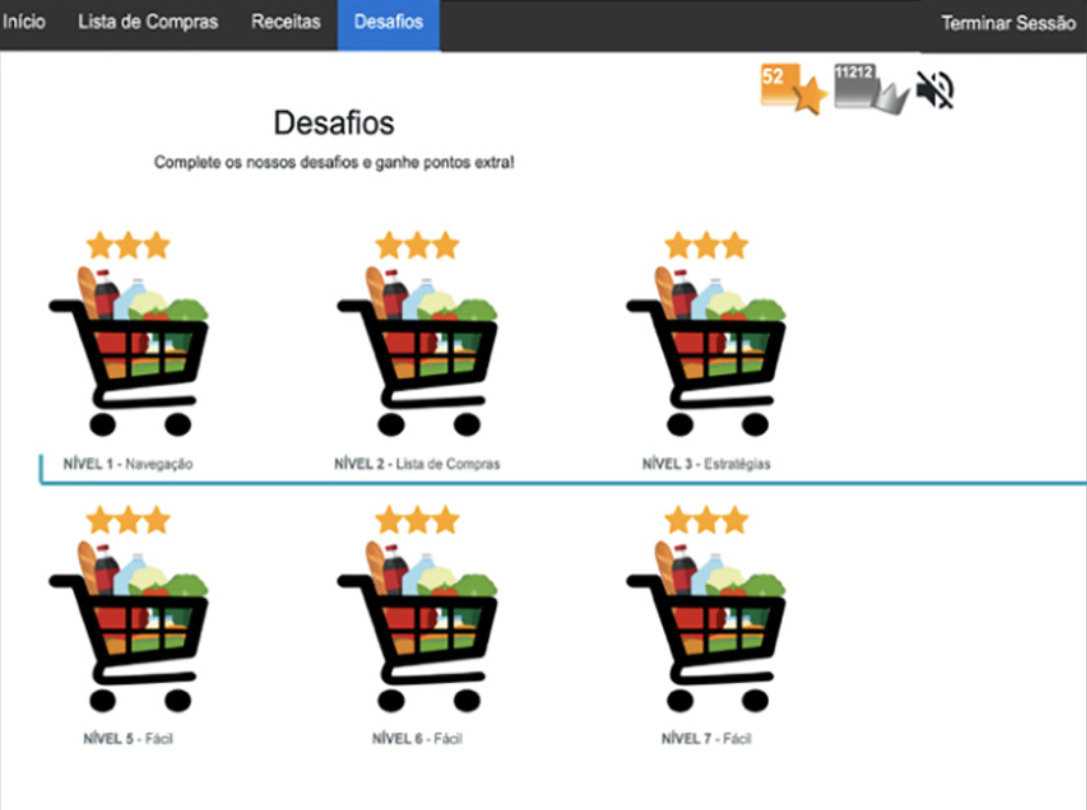
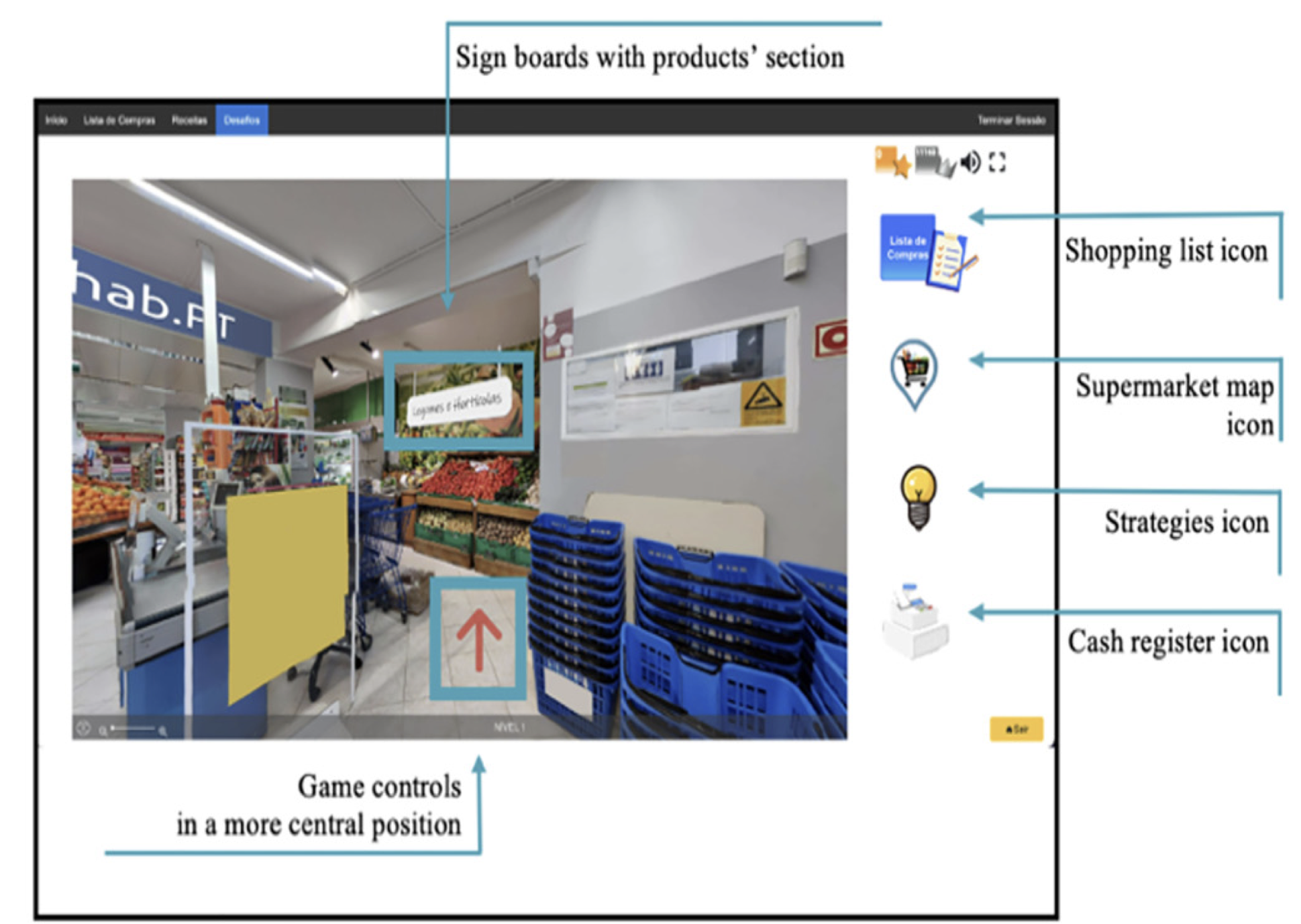
NeuroVRehab.PT is a web-based cognitive rehabilitation tool designed for psychologists working with people with mild cognitive impairment, offering a suite of interactive exercises to support memory, attention, and executive function. The tool features engaging, real-life tasks such as shopping in a virtual supermarket, creating recipes, and building shopping lists. Users are guided through activities like navigating, selecting items, and completing purchases using physical money or a card, all within a gamified environment that provides motivational feedback and performance tracking.
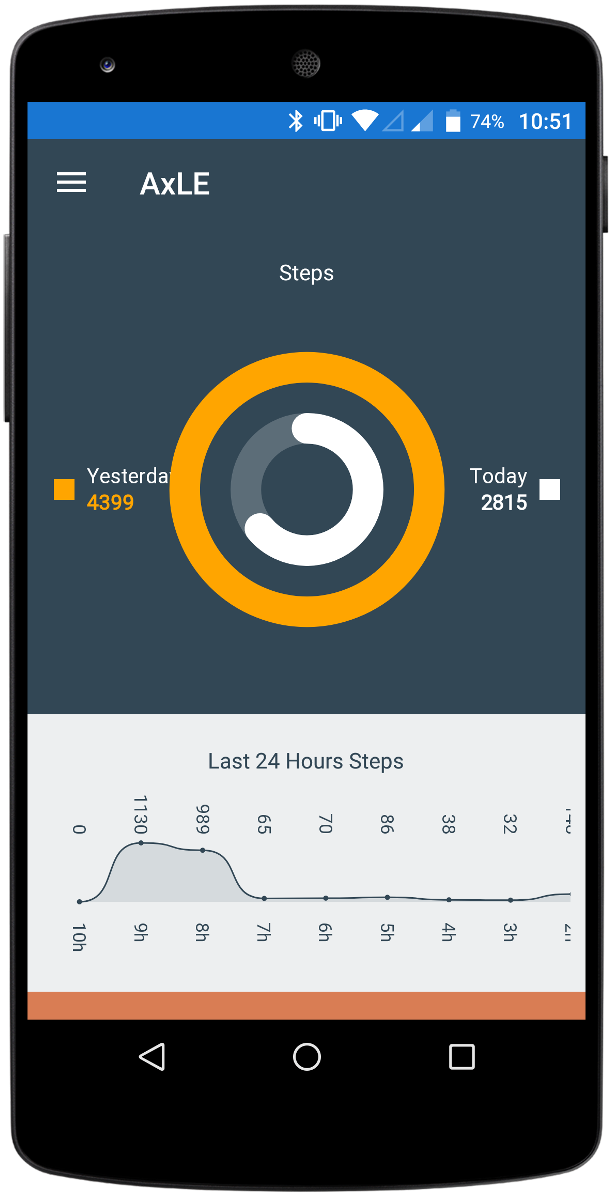
PDCueing is a cross-platform mobile application that allows people with Parkinson's and their caregivers to control a wearable device (AxLE) through BLE. Beyond traditional activity monitoring, the app allows the creation of cues for swallowing (to solve drooling problems), reminders for medication, and full control of the wearable device.
Get in Touch
Departamento de Informática
Rua Interior do Campus de Gualtar da Universidade do Minho, 4715 Braga, Portugal
[email protected]